
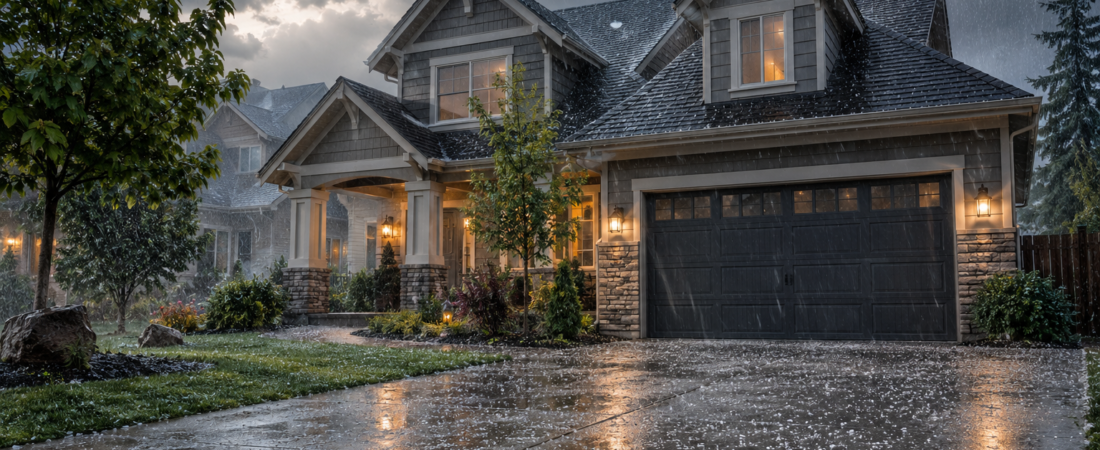
Why Homeowners Insurance Deserves Careful Attention
For many Americans, a home is their largest financial asset.
Yet homeowners insurance often receives less attention than the mortgage itself.
Consumers may know their annual premium but not their dwelling limit, personal-property settlement method, liability limit, special deductibles, or major exclusions.
That can become a serious problem when a loss occurs.
Homeowners insurance generally combines several protections within one policy, potentially covering the structure, personal belongings, additional living expenses, liability claims, and certain medical payments.
The NAIC explains that homeowners policies cover damage caused by perils covered under the contract, subject to policy limits. Policies may cover specifically named perils or a broader range of perils except those excluded.

Homeowners Insurance at a Glance
| Coverage | General Purpose |
|---|---|
| Dwelling | Main home structure |
| Other Structures | Detached structures |
| Personal Property | Belongings |
| Loss of Use | Certain additional living expenses |
| Personal Liability | Certain liability claims |
| Medical Payments | Certain injuries to others |
| Endorsements | Additional or modified protection |
The exact policy controls.
Dwelling Coverage
Dwelling coverage is intended to protect the insured home’s structure against covered causes of loss.
It may include components such as:
- Walls
- Roof
- Flooring
- Built-in cabinetry
- Attached garage
- Permanent fixtures
- Certain plumbing
- Certain electrical systems
The dwelling limit is particularly important because rebuilding costs can differ significantly from a home’s market value.
Rebuilding Cost Is Not the Same as Sale Price
Suppose a home could sell for:
$500,000
That does not necessarily mean it costs $500,000 to rebuild.
Market price can incorporate:
- Land value
- Neighborhood demand
- School district
- Lot size
- Local housing supply
- Location premium
Insurance replacement calculations instead focus primarily on rebuilding the insured structure.
The NAIC specifically distinguishes replacement cost from real-estate market value.

Other Structures Coverage
This may apply to detached structures such as:
- Detached garage
- Fence
- Shed
- Gazebo
- Certain other structures
Limits often relate to dwelling coverage, but homeowners should verify actual percentages and conditions.
Special structures or business-use buildings may require additional consideration.
Personal Property Coverage
A homeowners policy may cover personal belongings following certain covered losses.
Examples can include:
- Furniture
- Clothing
- Electronics
- Appliances
- Household items
However, categories of valuable property may have special limits.
Examples can include:
- Jewelry
- Fine art
- Collectibles
- Certain electronics
- Firearms
- Precious metals
- Business property
People with unusually valuable property should review sublimits and ask whether scheduled-property coverage or an endorsement is appropriate.
Replacement Cost vs Actual Cash Value
This distinction can materially change claim payments.
The NAIC explains that actual cash value considers depreciation, while replacement cost generally pays to repair or replace covered property using materials of similar kind and quality without deducting depreciation, subject to policy conditions and limits.
Example
Imagine a covered appliance originally cost:
$2,000
Years later, it is destroyed in a covered event.
Actual Cash Value
The insurer may consider:
- Age
- Wear
- Depreciation
- Current value
The claim amount may therefore be less than the cost of a new replacement.
Replacement Cost
Replacement-cost coverage may reimburse eligible replacement costs subject to:
- Limits
- Deductible
- Policy conditions
- Documentation
- Replacement requirements
Simple Comparison
| Feature | Actual Cash Value | Replacement Cost |
|---|---|---|
| Depreciation considered | Yes | Generally no |
| Claim payout | Often lower | Often higher |
| Premium | May be lower | May be higher |
| Replacement protection | More limited | Generally stronger |
Never rely only on the words “replacement cost.” Ask how and when the insurer pays recoverable depreciation.
Personal Liability Coverage
Homeowners insurance also commonly includes personal liability coverage.
It may apply when an insured becomes legally responsible for certain bodily injury or property damage involving another person.
Examples may include certain:
- Slip-and-fall claims
- Dog-related incidents
- Property-damage claims
- Accidents occurring away from the residence
Coverage depends on facts and exclusions.
Certain risks may require additional insurance.
Medical Payments to Others
This coverage can pay certain smaller medical expenses involving guests injured on the property, regardless of liability in some circumstances.
It is different from personal liability coverage.
Available limits vary.
Loss of Use
If a covered event makes the home temporarily uninhabitable, loss-of-use coverage may help with additional living expenses.
Depending on the policy, eligible expenses may include increased costs associated with:
- Temporary housing
- Meals
- Certain transportation
- Other necessary living expenses
Limits and time periods apply.
Keep receipts during a covered displacement.
Homeowners Insurance Deductibles
A deductible is the amount the policyholder generally must absorb before insurance pays a covered property claim.
A straightforward example:
- Covered damage: $15,000
- Deductible: $2,000
- Simplified insurer payment: $13,000
The NAIC uses a similar framework when explaining deductibles.
However, not all deductibles are necessarily fixed dollar amounts.
Percentage Deductibles
Some homeowners may encounter percentage deductibles for particular causes of loss, especially in catastrophe-prone areas.
For example:
- Dwelling insured for $400,000
- Deductible: 2%
- Potential deductible: $8,000
This differs dramatically from a $2,000 deductible.
Always ask:
“Is this deductible a dollar amount or percentage of my dwelling limit?”
What Homeowners Insurance Usually Does Not Cover
One of the most important parts of insurance is understanding exclusions.
Policies vary, but certain risks commonly require separate protection or special endorsements.
Flood
Most standard homeowners insurance does not cover flooding.
FEMA’s National Flood Insurance Program states that most homeowners policies do not cover flood damage, and separate flood insurance is used for this risk.
Earthquake
Standard policies may exclude earthquake or earth-movement losses.
Separate policies or endorsements may be available depending on location.
Maintenance and Wear
Insurance is generally designed for covered accidental losses rather than routine home maintenance.
Examples that may create coverage issues include:
- Long-term deterioration
- Neglected maintenance
- Wear and tear
- Insect damage
- Gradual leaks
Policy wording matters.
Flood Insurance Deserves Separate Attention
Flood risk is not limited to coastal properties.
FEMA notes that flooding can occur in many environments and that most homeowners insurance does not cover flood damage.
Homeowners can explore flood protection through:
- National Flood Insurance Program
- Private flood insurers
Eligibility, limits, waiting periods, exclusions, and pricing differ.
NFIP Coverage Structure
FEMA describes NFIP homeowner policies as offering separate protection for:
- Building
- Contents
The federal program has specific coverage limits and conditions.
Consumers with high-value homes or belongings may want to understand whether additional protection is available.
What Affects Home Insurance Premiums?
Factors can include:
- Replacement cost
- Location
- Construction type
- Roof age
- Home age
- Claims history
- Fire protection
- Weather exposure
- Deductible
- Coverage limits
- Discounts
- Security features
- Credit-based insurance information where permitted
- Additional endorsements
Pricing practices vary by state and insurer.
How to Compare Homeowners Insurance Quotes
A meaningful comparison should keep coverage reasonably consistent.
Compare These Items
| Feature | Quote A | Quote B | Quote C |
|---|---|---|---|
| Dwelling Limit | |||
| Other Structures | |||
| Personal Property | |||
| Loss of Use | |||
| Liability | |||
| Medical Payments | |||
| Base Deductible | |||
| Wind/Hail Deductible | |||
| Settlement Method | |||
| Annual Premium |
If Quote A costs $300 less but has a substantially higher wind deductible, the difference matters.
Replacement Cost Estimation
Insurers may estimate rebuilding cost using information such as:
- Square footage
- Construction type
- Number of stories
- Roof
- Bathrooms
- Interior finishes
- Attached structures
- Local labor costs
- Local material costs
Owners should tell the insurer about major renovations or additions.
Examples:
- Finished basement
- New room
- Luxury kitchen
- Home addition
- Detached building
- Major custom upgrades
Underinsuring a substantially improved property can create problems after a major loss.
Inventory Your Belongings
A home inventory can make a future claim easier.
Record:
- Room
- Item
- Brand
- Model
- Serial number
- Purchase date
- Approximate purchase price
- Photos
- Receipts
Store a copy somewhere other than only inside the home.
Cloud storage or another secure location may help preserve documentation after a catastrophe.
High-Value Items
Standard personal-property coverage may contain limits for certain categories.
If you own expensive:
- Jewelry
- Watches
- Artwork
- Collectibles
- Musical instruments
- Specialized equipment
ask the insurer whether separate scheduling is appropriate.
Home-Based Businesses
A standard homeowners policy may provide limited protection for business property or liability.
Someone operating a meaningful business from home should ask about:
- Business equipment
- Customer injuries
- Inventory
- Professional liability
- Commercial activity exclusions
- Business interruption
A separate business policy may be appropriate depending on the activity.
Short-Term Rentals
Renting all or part of a home through a short-term rental platform may create insurance issues.
Before doing so:
- Review the homeowners policy.
- Tell the insurer if required.
- Understand platform-provided coverage.
- Identify coverage gaps.
- Consider specialized insurance.
Do not assume platform protection replaces homeowners coverage.
Ways Consumers Commonly Lower Home Insurance Costs
Potential approaches include:
- Raising deductibles carefully
- Bundling eligible policies
- Installing qualifying protective devices
- Updating roofing
- Improving certain electrical or plumbing systems
- Maintaining continuous coverage
- Reviewing discounts
- Comparing insurers
- Updating coverage annually
Not every change produces a discount.
Do Not Reduce Coverage Blindly
There is an important difference between:
Lowering insurance cost
and
Reducing financial protection.
Dropping the dwelling limit solely to reduce premium may be risky if the reduced amount no longer reflects rebuilding cost.
A stronger strategy is to understand each component before making changes.
What to Do After a Homeowners Loss
After a covered event:
- Protect people from immediate danger.
- Contact emergency authorities if appropriate.
- Prevent additional damage when safe.
- Document damage before major cleanup.
- Contact the insurer.
- Ask about claim procedures.
- Keep temporary repair receipts.
- Keep additional-living-expense records.
- Maintain a claim log.
- Review settlement calculations carefully.
Do not make permanent major repairs before understanding insurer inspection requirements unless emergency action is necessary to protect property or safety.
Important Questions Before Buying Home Insurance
Ask the agent or insurer:
- Is dwelling coverage replacement cost?
- Is personal property replacement cost or actual cash value?
- What are my deductibles?
- Is there a separate wind or hurricane deductible?
- Is water backup covered?
- Is service-line coverage available?
- What are jewelry limits?
- Is equipment breakdown available?
- How is roof damage settled?
- Does the policy cover matching materials?
- What liability limit is included?
- Is flood excluded?
- Is earthquake excluded?
- Are home businesses restricted?
Homeowners Insurance FAQ
Is homeowners insurance legally required?
State law generally does not require every homeowner to carry homeowners insurance merely because they own a house. However, mortgage lenders generally require adequate insurance while they have a secured financial interest in the property.
Does homeowners insurance cover flood damage?
Most standard homeowners insurance does not cover flooding.
What is actual cash value?
Actual cash value generally reflects depreciation when settling certain covered property losses.
What is replacement cost?
Replacement-cost coverage generally focuses on the cost of replacing or repairing covered property with like kind and quality, subject to policy limits and conditions.
Should I insure my house for its sale price?
Not automatically. Market value and rebuilding cost measure different things.
Final Thoughts
A homeowners policy should be reviewed as a financial-protection contract, not just an expense attached to a mortgage.
The most important questions include:
- Is the dwelling limit realistic?
- Are belongings covered at replacement cost or depreciated value?
- What deductibles apply?
- Which disasters are excluded?
- Is liability coverage appropriate?
- What would happen if I could not live in the home?
- Do I need separate flood protection?
Understanding those answers before a claim is significantly easier than discovering them after a catastrophe.
Sources: NAIC homeowners-insurance guidance and FEMA/NFIP flood-insurance resources.